
Private Tours of Kalamata and the Messenia Region
Most travelers who make it to the Peloponnese go to Nafplio. Some reach Mycenae. A smaller number find their way to Olympia. Very few discover what lies further south — the wide, olive-covered plain of Messenia, the city of Kalamata, and the archaeological and natural landscape that surrounds it.
This is not a failure of ambition. It is a failure of information. Messenia is one of the least-visited and most rewarding regions of Greece, a place where the ratio of significance to tourist density is almost impossibly favourable. Ancient Messene — founded in 369 BC and now considered one of the best-preserved ancient cities in the Greek world — receives a fraction of the visitors that Delphi or Olympia attract, yet its monuments are extraordinary in their scale and completeness.
Elena Gaitani is based in Athens, where the primary focus of her work lies, but her roots are in Messenia. She knows it the way only a local can — and she holds the license to show you all of it.
Kalamata — A City That Rewards the Curious
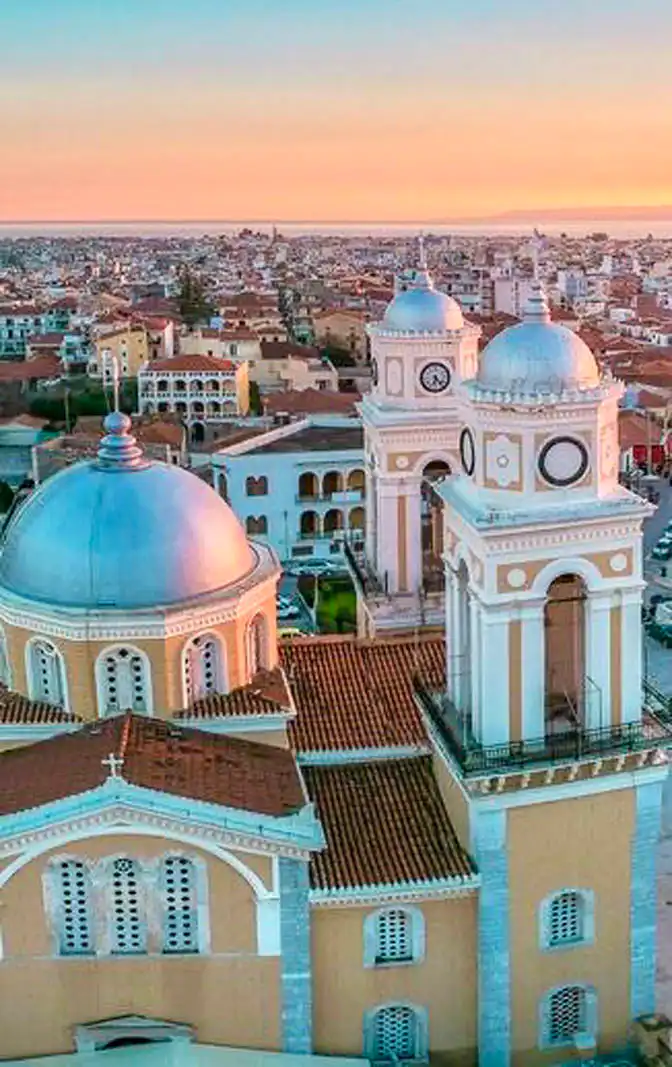
Kalamata is the regional capital of Messenia and the second-largest city in the Peloponnese. It is known internationally for its olives — a PDO product of genuine distinction, grown in the valley below the Taygetos mountain range and cured with a method unchanged for centuries. But the olives are a starting point, not a summary.
The city carries layers of history that most visitors — if they come at all — encounter only superficially. A Byzantine castle sits above the old town, offering a panorama that traces the curve of the Messinian Gulf and, on clear days, reaches the Mani peninsula to the south. The Archaeological Museum of Kalamata houses finds from the region spanning prehistory through the Roman period. The old silk-weaving district, the neoclassical central square, the covered market — the city has the texture of a place that has been continuously inhabited and continuously significant for three thousand years.
Elena walks Kalamata with you with the perspective of someone whose roots are here pointing to what the guidebook does not mention, explaining what the museum label does not say, choosing the morning coffee stop that has been here since before either of you was born.
Ancient Messene — The Site That Changes Everything
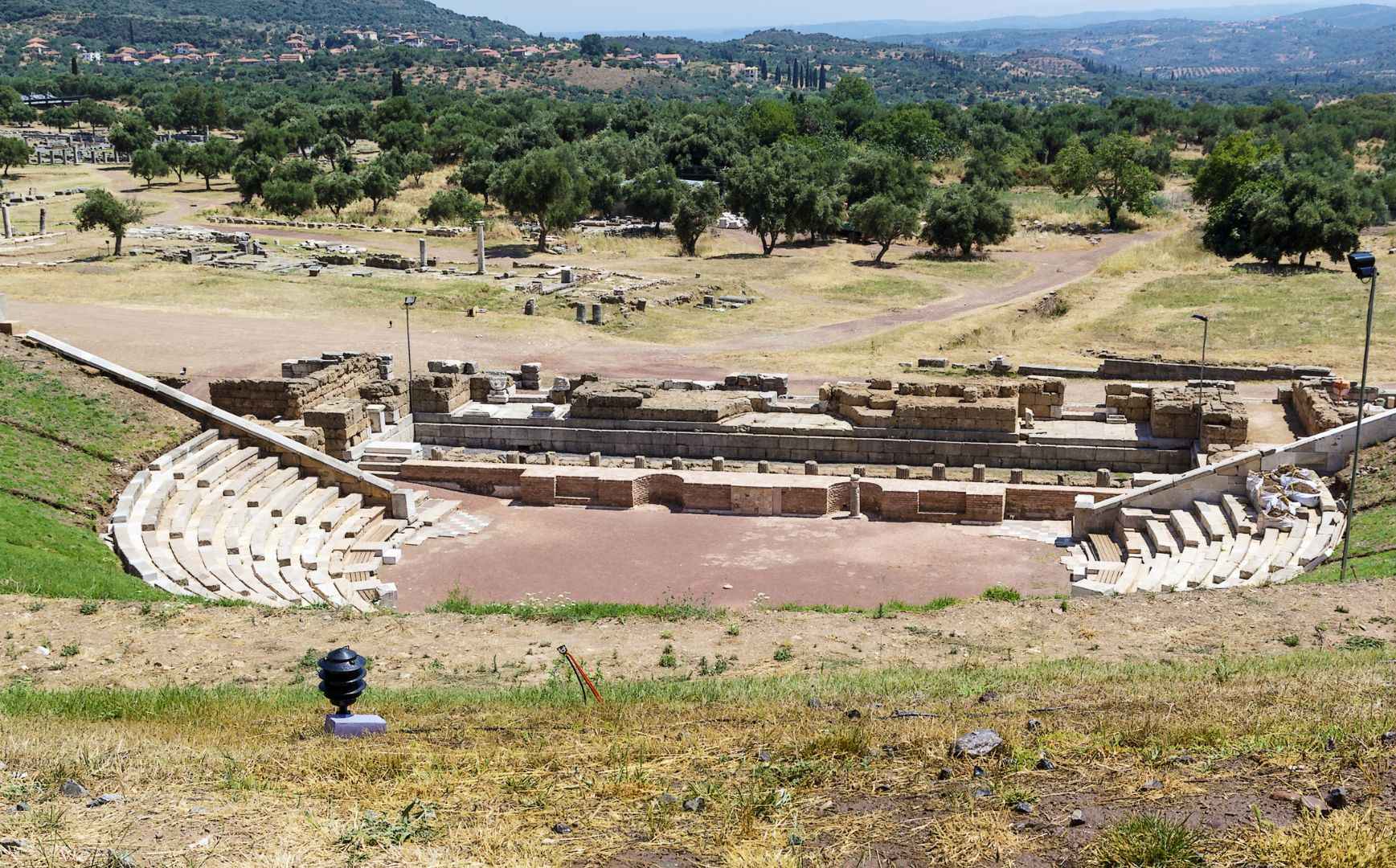
Thirty minutes west of the city, on the southern slopes of Mount Ithome, lies one of the most important and least-known archaeological sites in Greece.
Ancient Messene was founded in 369 BC by the Theban general Epaminondas, immediately following his defeat of Sparta at the Battle of Leuctra — a victory that ended Spartan dominance of the Peloponnese and liberated the Messenian people from centuries of helot servitude. The new city was built as a statement: monumental, fortified, and designed to last.
It lasted. The circuit walls — nearly nine kilometres in circumference, punctuated by towers and gates — are among the best-preserved in the ancient world. The Arcadian Gate, where the road from the north enters the ancient city, is a masterpiece of Hellenistic defensive architecture: a circular forecourt, a double gateway, and walls of fitted limestone that still stand to their original height.
Inside the walls, the excavations are ongoing and extraordinary. The sanctuary of Asclepius — the healing god — occupies the centre of the ancient city, surrounded by a colonnaded square containing a theatre, a stadium, a council chamber, and a series of heroic tombs. The statuary is abundant and largely in situ. The site is simultaneously an archaeological excavation and a landscape — olive trees growing between the columns, the mountain above, the silence of a place that relatively few people find.
Elena moves through Ancient Messene the way she moves through all the sites she knows deeply — with the specificity that comes from having studied the primary sources, the patience to let a place settle around you, and the ability to connect what you are seeing to the wider history it belongs to.
The Wider Messenia — What Else Is Here
Kalamata is an ideal base for a region that extends from the shores of the Messinian Gulf to the tip of the Mani peninsula. Depending on your interests and the time available, Elena can design private tours incorporating any of the following:
Pylos and the Palace of Nestor
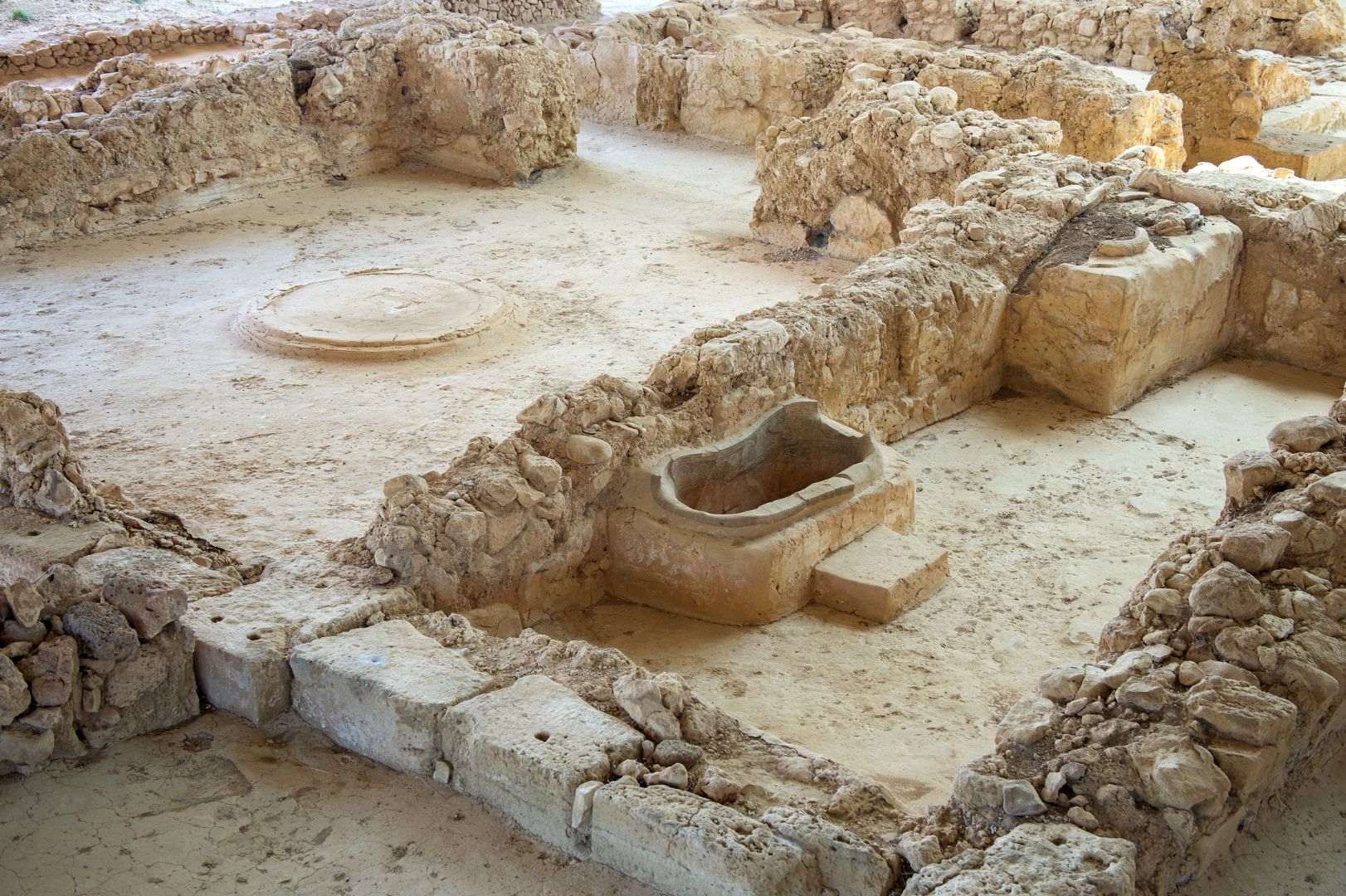
The palace complex at Pylos — the only Bronze Age Mycenaean palace on the Greek mainland to have been excavated almost entirely — is a remarkable site for anyone interested in the world that produced the Iliad. The palace dates to the thirteenth century BC. Its archive of Linear B tablets, discovered in 1939, transformed scholarly understanding of Mycenaean civilization. Elena explains what the tablets record, what the palace’s spatial organization reveals about Mycenaean court life, and why Pylos occupies the position it does in the landscape of ancient Greece.
Methoni and Koroni
The two Venetian fortresses at the southern tips of the Messinian peninsula — called the “Eyes of Venice” in the medieval Mediterranean — are extraordinary examples of military architecture layered across three thousand years of continuous occupation. Elena reads the fortifications architecturally and historically, from their Mycenaean foundations to their Ottoman modifications to their role in the Greek War of Independence.
The Bay of Navarino
The sea battle fought here in 1827 — in which a combined British, French, and Russian fleet destroyed the Ottoman and Egyptian fleet — effectively ended Ottoman control of southern Greece and made Greek independence inevitable. The bay, the island of Sphacteria, and the Museum of Underwater Archaeology at Pylos are all part of a landscape dense with consequence.
What a Private Tour of Kalamata Looks Like
Every itinerary Elena designs for Kalamata and the Messenia region begins with a conversation about what matters to you. Archaeological depth? Living culture? Landscape and food? A combination of all three?
From that starting point, she builds a day — or several days — that moves at your pace, spends time where you want to spend it, and connects the pieces in a way that gives the region coherence rather than presenting it as a list of attractions.
A full day in Kalamata and Ancient Messene — Morning in the city: the castle, the archaeological museum, the old market. Midday drive to Ancient Messene. Two to three hours inside the site. Return through the olive groves in the late afternoon.
A day exploring Pylos, Navarino, and the Palace of Nestor — Bronze Age palace in the morning, Ottoman fortress and Venetian fortifications in the afternoon, dinner in a harbor town that has been fishing the same gulf for three millennia.
A multi-day Messenia tour — Two or three days incorporating Kalamata, Ancient Messene, Pylos, the Mani, and Mystras, with overnight stays in small hotels chosen by Elena for their quality and their location.
Frequently Asked Questions
The most visited sites in Greece are extraordinary. They are also crowded, managed for throughput, and surrounded by the infrastructure of mass tourism. Messenia is what Greece looked like before that infrastructure arrived — and in many places still does.
Elena Gaitani is based in Athens, but her deep roots in Messenia and her extensive experience guiding in the region make her the ideal guide for travelers wishing to explore it. She knows it with the depth that comes from years of guiding private visitors through its sites, its landscapes, and its living culture. If you want to see the part of Greece that most travelers miss — guided by a licensed guide who knows exactly where to take you and why — she is ready to plan your days here.