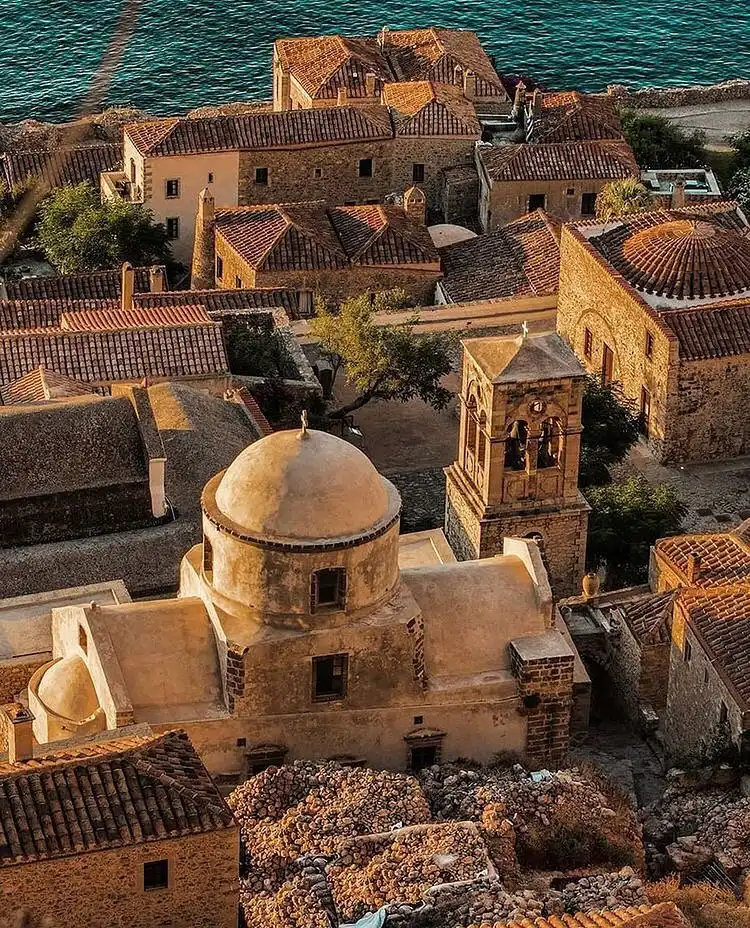
Discover Messenia and Sparta


Discover Messenia with a local tour guide
Messinia is one of the most captivating regions of the Peloponnese, offering an inspiring blend of natural beauty and rich heritage. Dramatic landscapes, a wealth of archaeological sites, impressive medieval castles, engaging museums, and charming towns come together to create a destination of remarkable diversity.
We highly recommend experiencing Messinia as part of a three-day escape from Athens, allowing enough time to combine its highlights with important sites in Sparta and the surrounding region. This extended itinerary offers a more relaxed pace and a deeper appreciation of southern Greece, blending archaeology, history, landscapes, and local life. It is also ideal for a relaxing vacation with some beachtime.
Below are some of the most highly recommended tours in Messinia, carefully selected to showcase the region’s character and cultural richness.
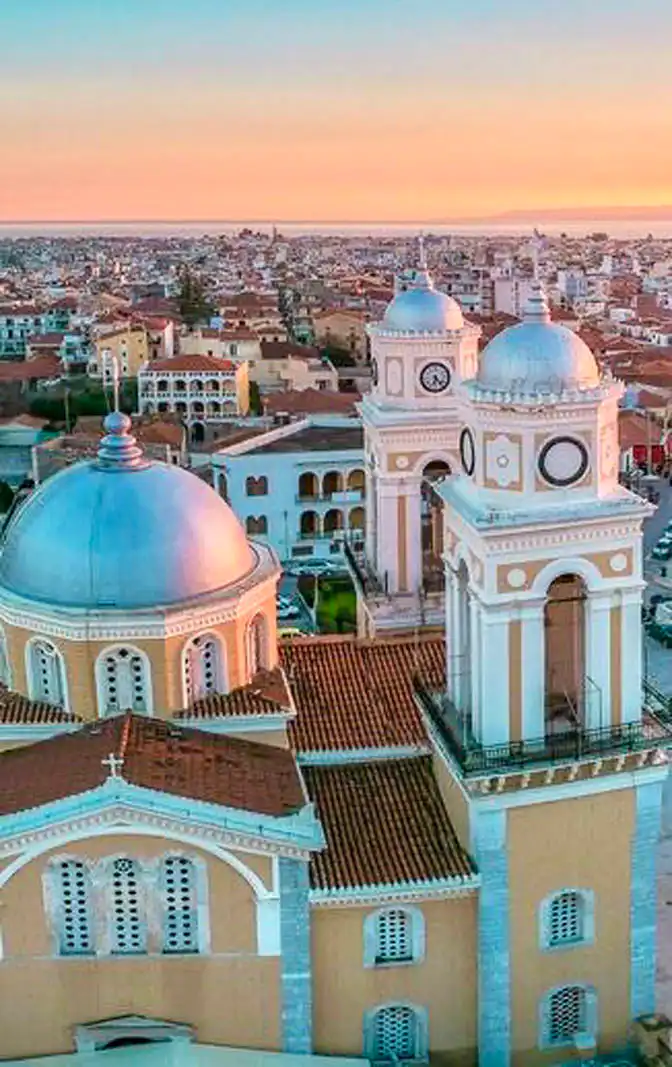
The Town of Kalamata
Renowned worldwide for its olives, exported to every corner of the globe, Kalamata is the vibrant capital of Messinia and a wonderfully inviting town to explore. Blending history, culture, and everyday Greek life, Kalamata offers a relaxed yet lively atmosphere that immediately charms its visitors.
A walking tour with your private local guide introduces you to the town’s most important highlights. You will visit its museums, admire the impressive Orthodox cathedral, and discover elegant Byzantine churches, before strolling through the historic old quarter with its traditional market and workshops of local artisans.
The walk continues into the modern center of Kalamata, where you will have the opportunity to mingle with locals in the town’s best pastry shops and gelato spots—beloved gathering places full of local flavor. Along the way, your guide will surprise you with small treats, adding a warm and personal touch to an experience that captures the true spirit of Kalamata.
Ancient Messene
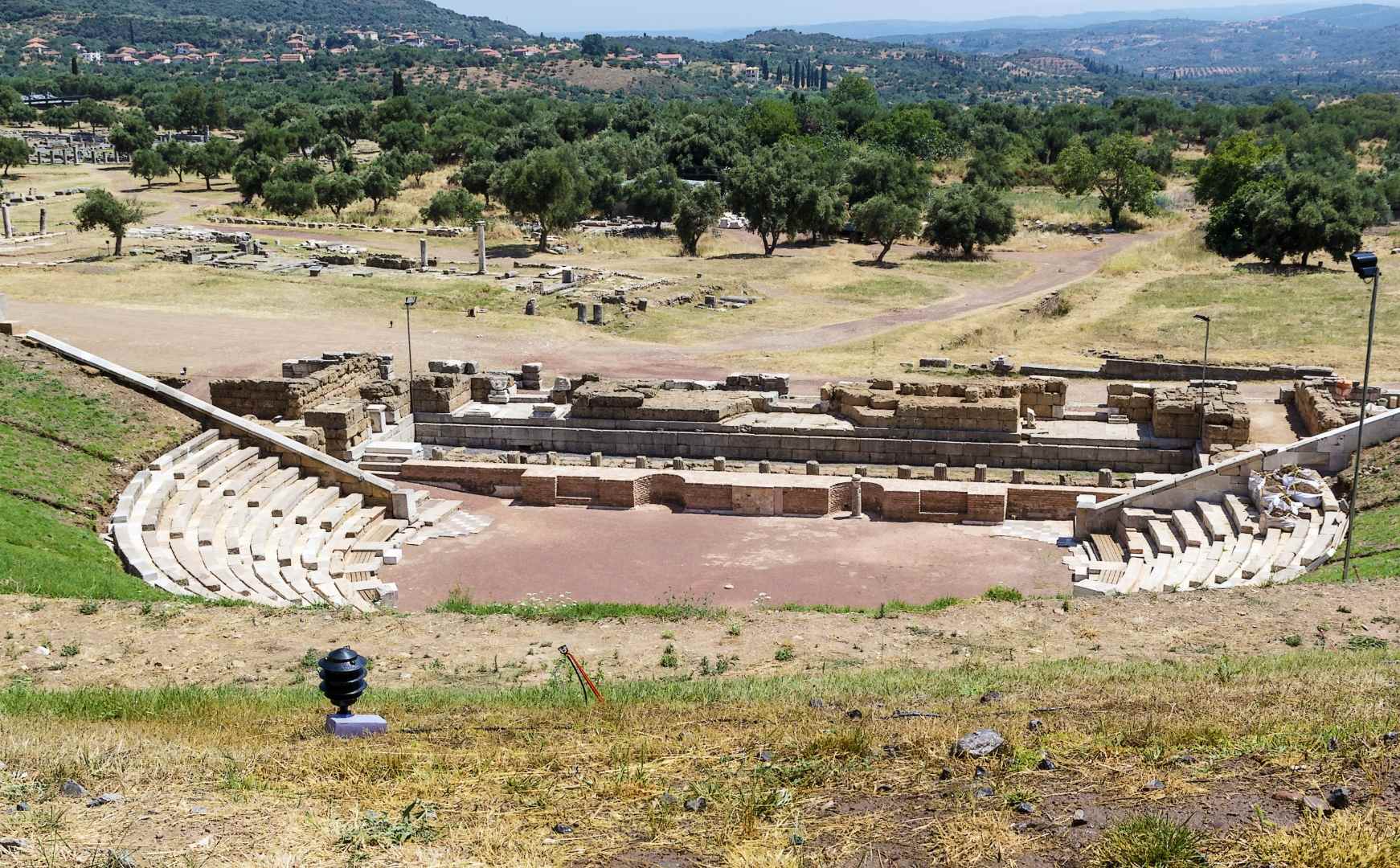
Ancient Messene is one of the most impressive and best-preserved archaeological sites in Greece and is truly rewarding to explore with a knowledgeable guide. Founded in 379 BC by the Theban general Epaminondas, the city was established after his decisive victory over Sparta. For generations, the Spartans had dominated the land of the Messenians, enslaving or forcing much of the population into exile.
With the liberation of Messenia, Epaminondas brought the Messenians back to their homeland and oversaw the creation of a new, ambitious city — designed not only as a place of residence but as a powerful symbol of freedom and renewal. Ancient Messene was laid out with grand public spaces and monuments: a theatre, elegant temples, an impressive stadium, fountains, statues adorning the city center, and formidable defensive walls encircling the settlement.
Set in an extraordinarily beautiful natural landscape, the site offers a rare combination of scenic splendor, historical depth, and archaeological significance. Ongoing excavations continue to reveal new buildings and discoveries each year, allowing visitors to witness a living archaeological project where the ancient city steadily emerges from the earth.
A guided visit brings Ancient Messene vividly to life, revealing the story of resilience, liberation, and urban brilliance that makes this site one of the true highlights of southern Greece.


The Palace of Nestor
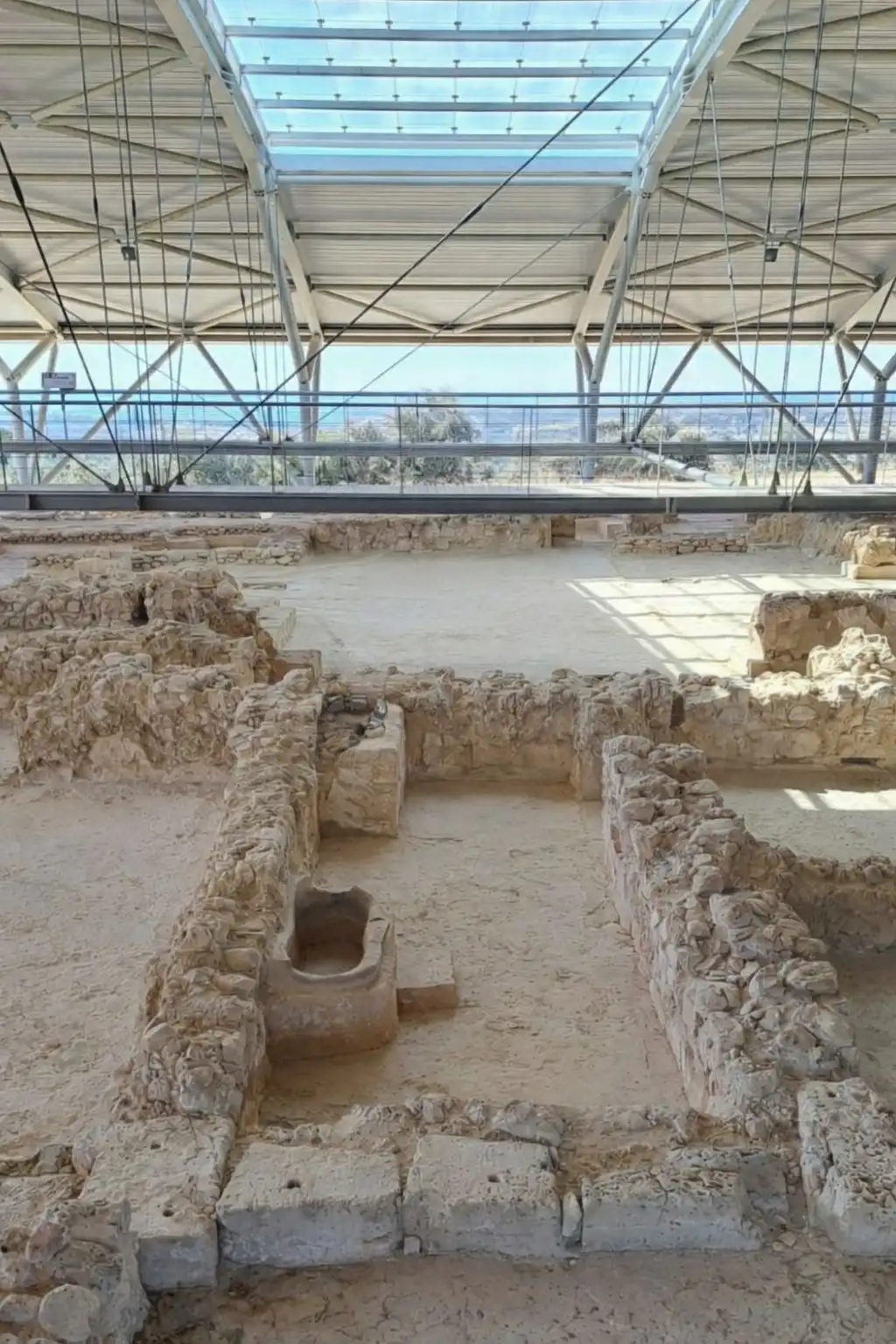
A visit to the Palace of Nestor is best experienced with a knowledgeable local guide, who brings to life one of the most evocative chapters of Greek mythology and prehistory. According to Homer, Nestor was the oldest king to take part in the Trojan War—a wise and respected leader, renowned as the peacemaker among the Greeks during the long and challenging years spent on the battlefields of Troy.
The palace was discovered several decades ago near Pylos, set in a breathtaking landscape of rolling olive groves, atop a hill with sweeping views toward the sea. As you explore its remains, your guide will help you imagine the grandeur of the royal complex, its administrative importance, and the sophisticated world of the Mycenaean civilization revealed through remarkable archaeological evidence.
The experience can be enriched with a visit to the nearby town of Chora , home to the Archaeological Museum that houses the finds from the Palace of Nestor, including impressive artifacts and tablets, as well as discoveries from the area’s prehistoric tholos tombs.
Together, the palace and museum offer a fascinating journey into a legendary past, where myth, history, and an extraordinary natural setting come together in one of Messinia’s most captivating sites.
The Castle of Pylos and the Bay of Navarino
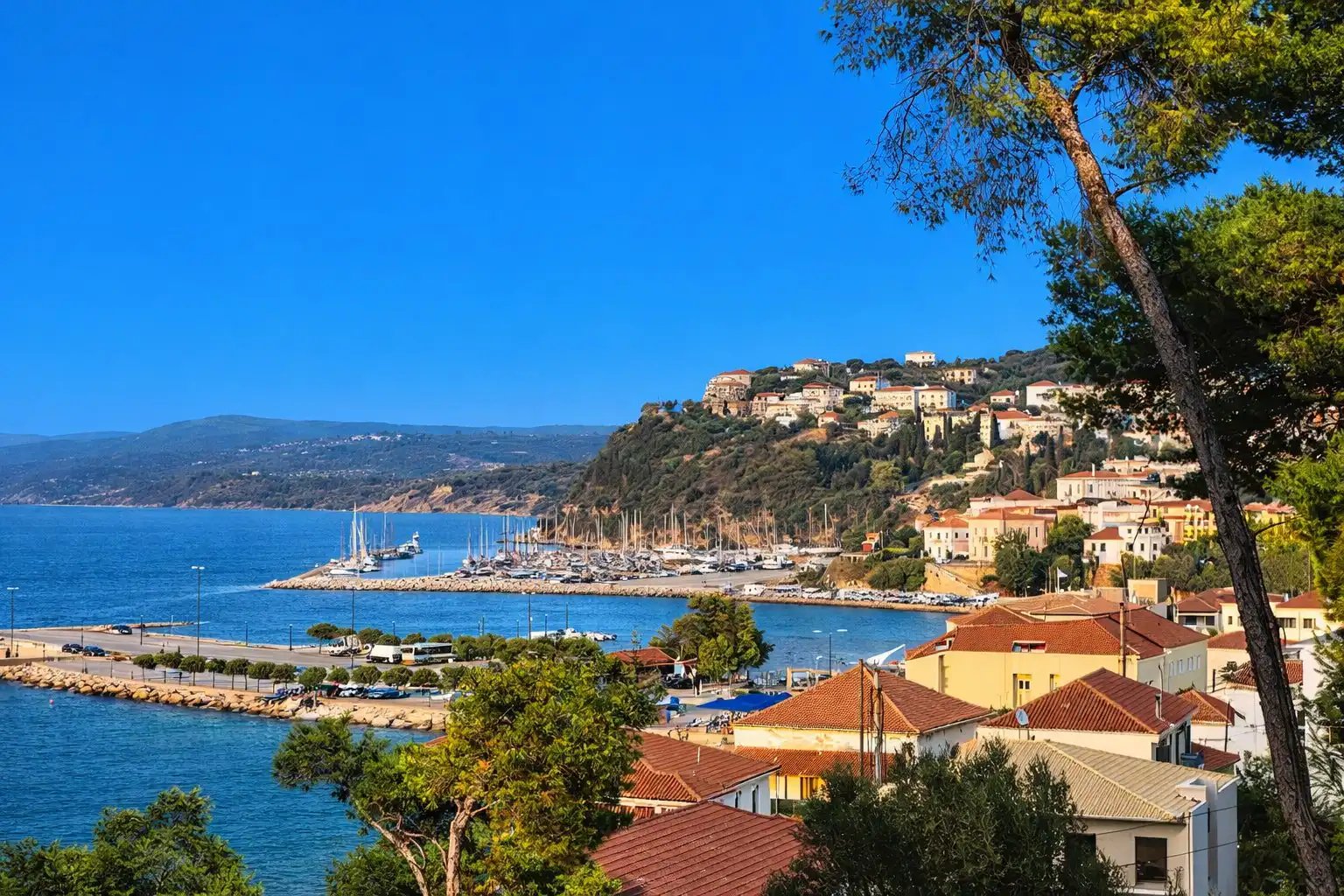
The town of Pylos is one of the most picturesque corners of Greece, gracefully set around a natural harbor and steeped in history. Dominating the town is the impressive Venetian fortress of Niokastro, a visit well worth making not only for its historical significance but also for its majestic panoramic views over the Bay of Navarino.
Navarino Bay is the site of the historic naval battle of 1827, the last major naval engagement fought entirely with sailing ships. It was here that the combined fleets of Britain, France, and Russia defeated the Ottoman–Egyptian navy—an event that ultimately led to the recognition of Greece as an independent state. Within the walls of the fortress you will also find the Museum of Underwater Archaeology, which presents fascinating insights into marine research and discoveries from ancient shipwrecks and submerged settlements.
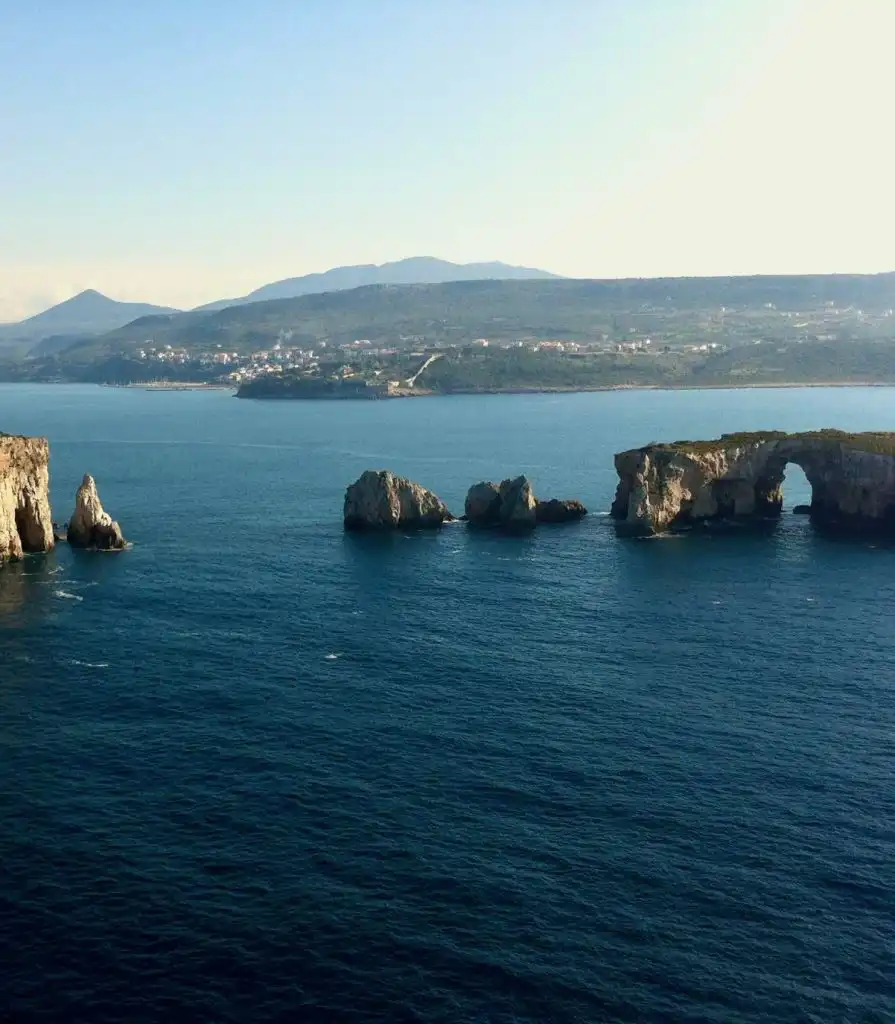
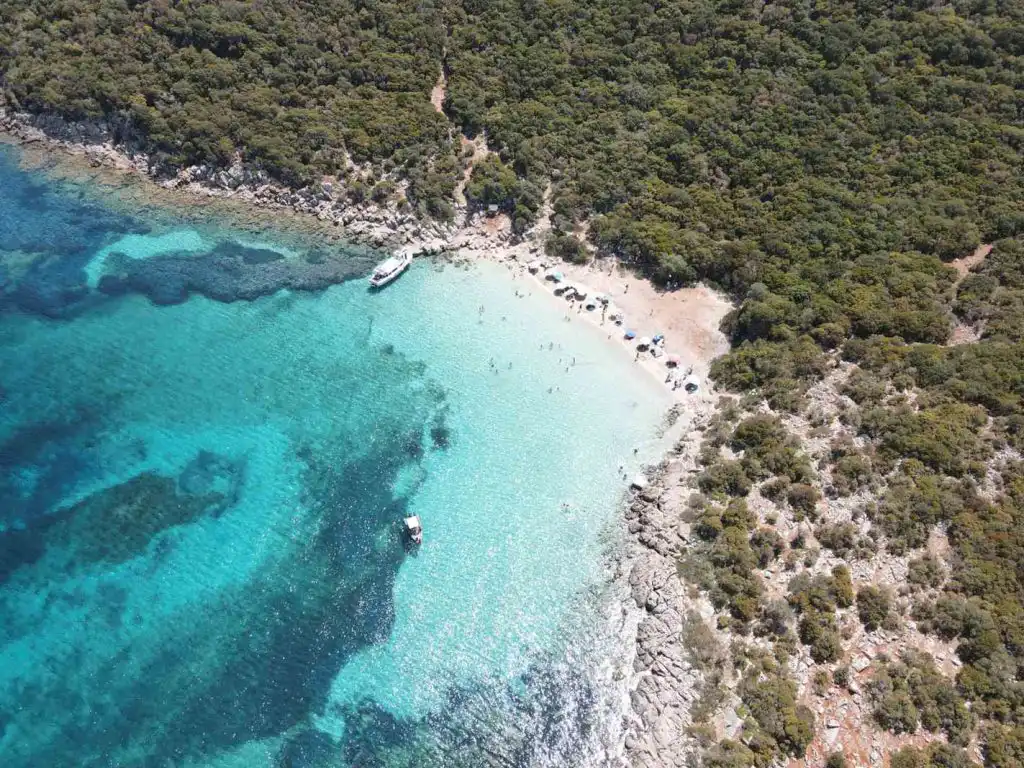
Just a few nautical miles offshore lies the unspoiled Sapienza, one of the most pristine islands in the Mediterranean. Protected as a natural reserve, Sapienza is renowned for its crystal-clear waters, rich marine life, and untouched landscapes. The surrounding sea is exceptionally deep—among the deepest in the Mediterranean—creating remarkable underwater visibility.
Upon request, your visit can be beautifully complemented with a swimming and snorkeling experience around the island of Sapienza. Exploring its turquoise coves and underwater scenery offers a refreshing contrast to the historical exploration of Pylos and Navarino, blending culture, nature, and relaxation into a truly memorable experience.
Together, Pylos, Navarino Bay, and Sapienza form a captivating combination of history, dramatic seascapes, and natural beauty—one of the highlights of Messinia and the southwestern Peloponnese.



Methone and Korone
Methoni and Koroni are two exceptionally picturesque towns of Messinia, once known as the “Eyes of Venice.” For centuries, the Republic of Venice controlled both harbors, recognizing their strategic importance along the sea route that connected Venice with the Holy Land. From these ports, the Venetians traded salt, wax, grain, olive oil—and even slaves—transported from across the Peloponnese to markets throughout the Mediterranean.
Each town is crowned by a magnificent Venetian castle, dramatically positioned by the sea. From their ramparts, visitors are rewarded with sweeping views over the Ionian Sea and the surrounding coastline. A guided visit to the castles of Methoni and Koroni with a local Greek guide reveals a fascinating history filled with intrigue, power struggles, and frequent changes of rule, as these fortresses passed from one empire to another over the centuries.
Your expert guide in Messinia will explain the architectural features of the castles and the function of their various buildings—bastions, gates, storage areas, and defensive towers—bringing their strategic role vividly to life.
Equally rewarding is a leisurely walk through the towns themselves. With their charming traditional architecture, narrow streets, and relaxed seaside atmosphere, Methoni and Koroni invite you to slow down and enjoy their timeless beauty. Together, they offer a perfect blend of history, architecture, and authentic coastal life—an unforgettable highlight of southern Messinia.
The Peninsula of Mani
One of my favorite destinations in Greece is the Mani Peninsula, one of the most authentic and captivating areas you can explore in the Peloponnese. Its culture is deeply distinctive, its history powerful, and its natural beauty strikingly dramatic.
Mani stretches across the southernmost edge of the Peloponnese, where the waters of the Aegean Sea meet those of the Ionian Sea, and where the rugged gorges of Mount Taygetus descend into the serene valleys of Messinia. The landscape is defined by contrasts: wild mountains and calm seas, austere stone villages and luminous coastal views.
The people of Mani—the Maniots—are known for their strong character and fierce independence. They proudly consider themselves descendants of the ancient Spartans. Seeking refuge from invaders and pirate raids, they settled here centuries ago and successfully defended their land throughout history, remaining unconquered. Their unique tower houses, built of stone and rising vertically from the earth, were both homes and fortresses, designed to protect each family in times of conflict.
Exploring Mani is most rewarding with a local expert. The region is rich in hidden treasures that are easy to miss without guidance: remote villages, historic monuments, exquisite Byzantine churches, breathtaking viewpoints, and areas of exceptional natural beauty. The roads are often narrow and winding, especially when venturing off the main routes, making a local driver highly recommended.
Traveling with a knowledgeable guide and driver not only ensures comfort and safety, but also opens the door to Mani’s lesser-known corners and stories. It is, without doubt, the best way to experience this raw, powerful, and unforgettable region of Greece.




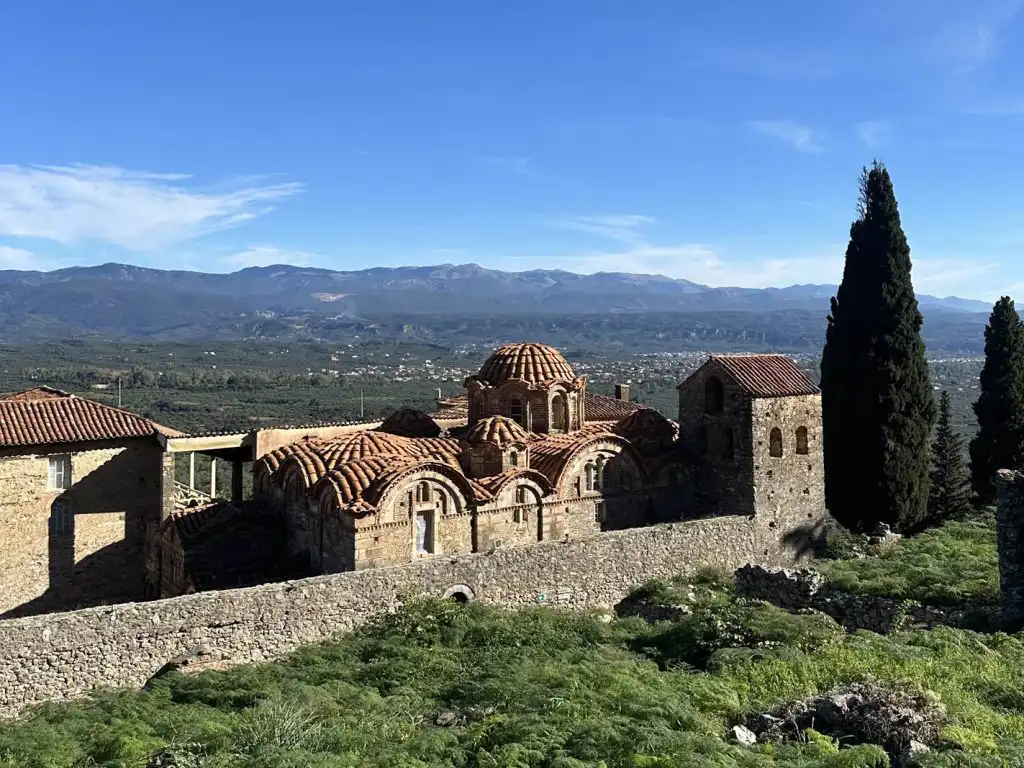
Mystras & Sparta
A journey to Mystras and Sparta is a deeply rewarding experience and one we highly recommend, especially for travelers interested in history, culture, and dramatic landscapes.
While ancient Sparta itself has only limited archaeological remains, its historical significance is immense. This was the city of discipline, courage, and military excellence—the home of warriors whose values shaped the ancient Greek world. During our visit, we stop at the statue of Leonidas, where your guide brings to life the powerful story of the Battle of Thermopylae and the ideals that made Sparta legendary. Standing before Leonidas, the spirit of ancient Sparta becomes tangible through storytelling rather than ruins.
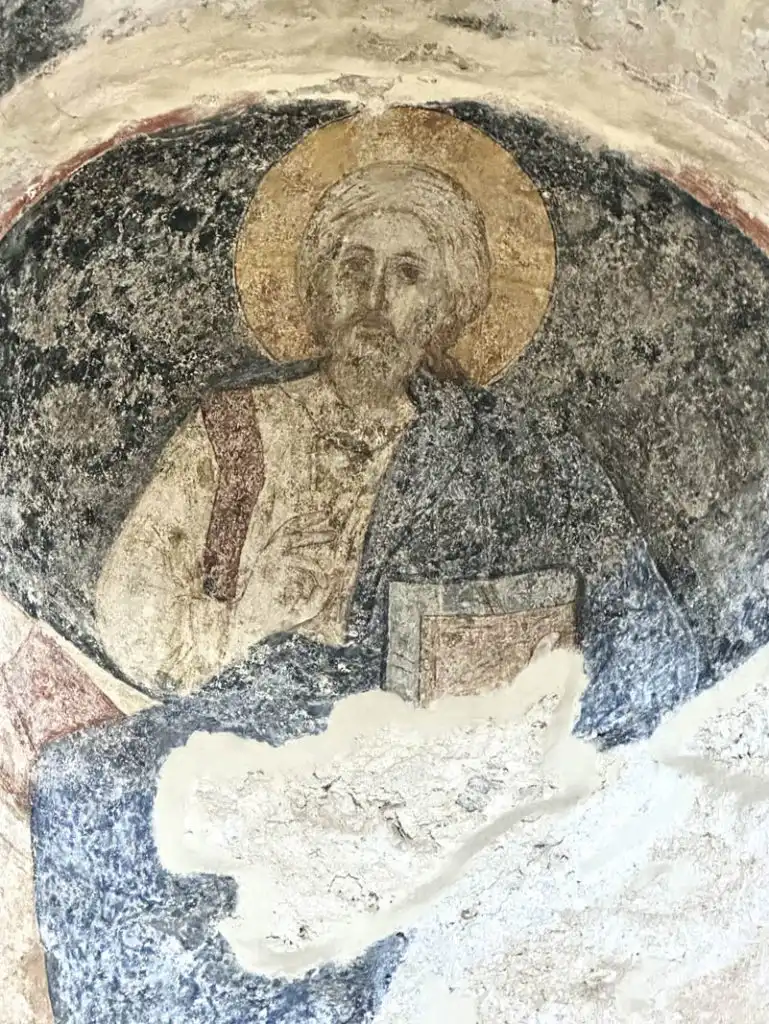
The true highlight of the region, however, is Mystras, one of the most extraordinary historical sites in Greece. Built on the slopes of Mount Taygetus, this UNESCOWorld Heritage Site is a remarkably well-preserved medieval city, often described as an open-air Byzantine museum. Walking through Mystras feels like stepping back in time: fortified walls, palace ruins, monasteries, and exquisitely decorated churches unfold along stone pathways, all set against breathtaking views of the Spartan plain.
With a knowledgeable guide, Mystras reveals its full magic. You will discover its role as a major cultural and intellectual center of the late Byzantine world, admire stunning frescoes, and understand how this once-thriving city blended power, faith, and art in a truly unique way.
Surrounded by the wild beauty of the Mount Taygetus and the fertile Laconian landscape, this tour offers far more than a simple visit to historical sites. It is a journey through layers of Greek history—from heroic antiquity to medieval grandeur—enriched by storytelling, scenery, and a strong sense of place.
For travelers who appreciate history brought to life through expert narration and unforgettable settings, the Mystras and Sparta tour is an experience not to be missed.
Monemvasia
Monemvasia is one of the most enchanting destinations in Greece—a place that feels suspended between myth, history, and the sea. Dramatically rising from the Aegean as a massive rock connected to the mainland by a single causeway, Monemvasia is often called the “Stone Ship”, a name that perfectly captures its imposing and poetic presence.
Founded in the Byzantine era, Monemvasia developed into one of the most important fortified towns of the medieval Mediterranean. Over the centuries it passed through Byzantine, Venetian, and Ottoman hands, each leaving their mark on its architecture and atmosphere. Entering the castle town feels like stepping into another world: narrow cobbled lanes, stone mansions, hidden courtyards, and elegant churches unfold behind the fortified walls, untouched by modern life.
With a knowledgeable guide, Monemvasia reveals its many layers. You will explore the beautifully preserved Lower Town, where medieval houses, small shops, and cafés create a timeless setting, and learn about the town’s strategic importance, trade routes, and everyday life behind the walls. For those who wish, the ascent to the Upper Town rewards you with breathtaking panoramic views over the sea and the surrounding coastline, as well as a powerful sense of the town’s former glory.
Monemvasia is not only visually striking—it is deeply atmospheric. The sound of footsteps on stone, the scent of the sea, and the play of light on ancient walls create an experience that is both romantic and contemplative. It is a place best explored slowly, allowing time to absorb its beauty, stories, and quiet magic.
Ideal as a highlight of a Peloponnese itinerary or as part of a journey through Laconia, Monemvasia offers an unforgettable blend of history, architecture, and natural drama. A visit here is not simply a tour—it is an immersion into one of Greece’s most evocative and poetic landscapes.